Lessons from Having a Pet: What Love and Relationships Really Mean
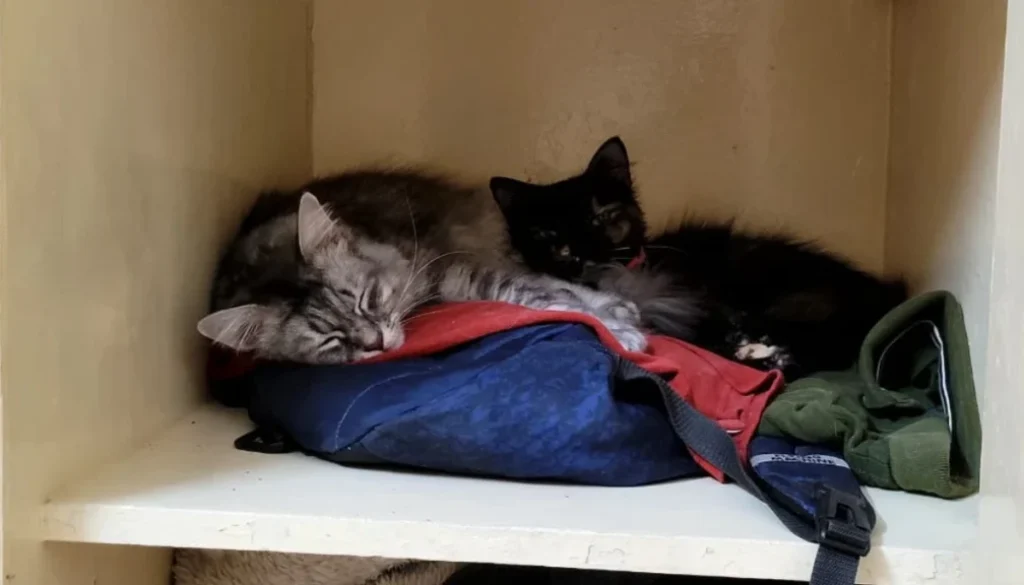
I’ve had cats since I was eleven. For a long time, they were simply part of the background of my life—a comforting, quiet presence I took for granted. It was only recently, while reflecting on the complexities of my human relationships, that I began to look more closely at the bond I share with my cat. In that quiet examination, I stumbled upon some profound truths about the nature of love, care, and why some bonds feel effortless while others are a struggle.
The Grammar of a Quiet Bond 💭
My love for her isn’t declared in grand speeches or dramatic gestures. It’s whispered in a hundred small, consistent actions. I buy her favorite food even when my budget is tight. I leave the window cracked so she can feel the breeze and watch the birds. I talk to her about my worries and dreams, and her silent, steady presence is a comfort I can’t fully explain.
I realized this is the unspoken grammar of our relationship. Love, I saw, is built less on milestone moments and more on the foundation of these daily, almost thoughtless rituals. It’s in the showing up, day after day.
The Effortless Peace Versus The Human Struggle 😔
There’s a reason the relationship with a pet feels so peaceful. Science tells us that interacting with animals can lower cortisol, boost oxytocin, and ease loneliness. But for me, the difference became clear when I contrasted this ease with the friction I sometimes feel in my relationships with people.
My patience, which seems infinite with my cat, can wear thin quickly with humans. My first instinct was to blame expectation—the invisible ledger of hopes and assumptions we carry for each other. But I’ve come to see that expectation is only part of the story.
The Real Roots of Irritation 🤯
Lately, I’ve noticed a shortness in my tone with people, a quickness to irritation over minor things. Looking inward, I started to see a pattern:
· My own cup is empty. When I’m stressed, tired, or overwhelmed, my capacity for patience shrinks. I bring my depletion to the interaction, and it colors everything.
· History weighs heavily. With people, a small action can trigger a memory of a past disappointment. With my cat, every day feels like a clean slate. There’s no baggage.
· Irritation is often a mask. Sometimes, my annoyance isn’t really about the other person. It’s a disguise for my own sadness, fear, or feeling of being unappreciated.
The problem wasn’t just the expectations I placed on others; it was the state I was in when I showed up for them.
The Realization ✨
My cat didn’t teach me these things. By observing my own unwavering care for her, I uncovered truths I had always known but rarely practiced:
1. Love is a practice of consistency. Its true measure is in the small, repeated choices, not the occasional grand gesture.
2. Presence is a form of care. I don’t need my cat to solve my problems. Her simple, non-judgmental presence is the gift.
3. Patience is a choice conditioned by my own well-being. With her, I choose patience effortlessly. With people, I often let my own stress make the choice for me.
Carrying It Forward 🌱
This reflection led me to a challenging question: If I can offer this kind of steady, present love to my cat, why do I sometimes withhold it from the people I value most?
The answer lies in applying the same principles consciously:
· Name expectations instead of hiding them.
· Prioritize presence over perfection.
· Check my own emotional state before engaging.
· Repair small hurts quickly, before they fossilize into resentment.
Closing Thought 💖
I’ve made mistakes in my relationships. I’ve let connections fracture, and that truth still carries a sting. But this quiet journey of observation, sparked by my cat, has given me a clearer mirror to look into. Love isn’t a fleeting feeling; it’s a daily, active choice. It’s the window left open, the favorite food bought, the patience offered even when you’re tired. If I can do that for her, then I can certainly strive to do it for the humans in my life. That’s not her lesson—it’s my own awakening.
—————————————————————————————————————————
FAQs: Your Questions Answered ❓
Absolutely. While my reflection was sparked by my relationship with my cat, the core principles apply to any consistent, caring bond in your life. It could be with a plant you nurture daily, a quiet place you visit regularly, or even the steady rhythm of a personal ritual. The key is observing where you naturally show up with patience and consistency, and then exploring how to bring that same energy to your human relationships.
This is a great point. The comparison isn’t about equating the bonds, but about contrasting the energy we bring to them. The relationship with a pet is simpler because it lacks the complex two-way communication and history of human bonds. That simplicity acts like a clean mirror, allowing us to see our own capacity for steady, patient care without the usual complications. The goal isn’t to have human relationships that are as simple as pet relationships, but to consciously bring more of that patient, present energy into our more complex human connections.
It’s a skill that takes practice. Start with a simple “internal weather check” before a conversation. Take three deep breaths and ask yourself: Am I feeling tired, hungry, or stressed from something else? Acknowledge that feeling without judgment. This tiny pause creates just enough space to prevent your pre-existing state from dictating the interaction. You can then choose to proceed with more awareness or even politely postpone the conversation if you’re too depleted.
The simplest and most powerful step is to acknowledge the moment. If you snap at someone or notice a chill, address it as soon as you can. You don’t need a grand apology. A short, genuine statement like, “Hey, I realized I was short with you earlier. I’m feeling stressed about [X], and it wasn’t fair to take it out on you,” can work wonders. It stops the hurt from festering and shows you value the relationship more than your pride.
This reflection is aboutowning your part of the dynamic, which is the only part you have full control over. It’s not about blaming yourself or doing all the work. By changing your own contribution—becoming more present, patient, and clear—you often shift the entire dynamic of the relationship. It invites the other person to respond differently. Healthy relationships are a two-way street, but you can only drive your own car with intention.
It’s never too late to learn and grow. While you may not be able to restore a specific past relationship, the insight isn’t wasted. The lessons about consistency, presence, and repair are for all your relationships—current and future. Forgive yourself for past mistakes, understanding that you were doing the best you could with the awareness you had at the time. Now, with new awareness, you can do better. That’s the heart of growth.