3 Tips to Boost Sales of Your Store.
We’ve all been there. A customer walks in, their eyes scanning the shelves, a specific desire in mind. As a salesperson, your pulse quickens. This is the moment—the chance to connect, to solve a problem, and to make a sale. But then, almost instinctively, you hear yourself say something like, “This is an excellent, shoe for… recovery runs.“
In that moment, something shifts. The customer’s expansive “what if” suddenly narrows to a “but only if.” You haven’t lied. You’ve stated a fact. Yet, you’ve inadvertently drawn a boundary around the product’s potential in the customer’s mind.
Selling is a performance of language and perception. It’s not about manipulating the truth, but about framing it in a way that builds value and possibility. Your product and your store has so much of competition in the market now that it is not as easy to convince customer as before. Competition you see around you or the online threats from giant sellers like amazon. The most successful sales professionals aren’t just order-takers; they are storytellers, consultants, and psychologists who understand that every word, every expression, and every disclosed feature can be a stepping stone or a stumbling block. This delicate dance between informing and inspiring, between stating a fact and framing a benefit, is the core of modern salesmanship.
Let’s unravel this art, moving beyond basic feature-listing to a more nuanced, effective, and ultimately, more successful approach.
Part 1: The Art of Framing words.
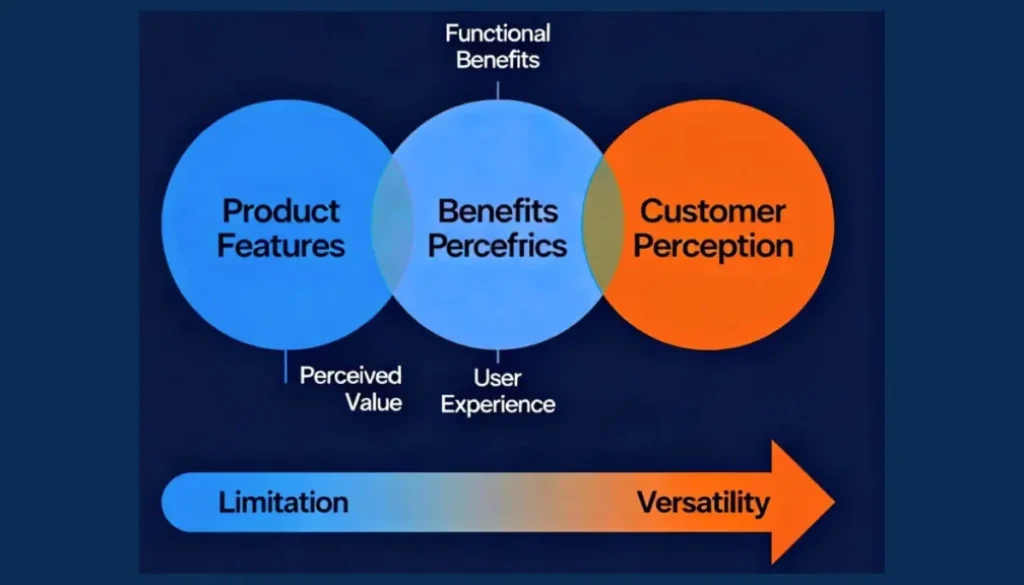
Your initial example of the ₹20,000 running shoe is perfect. The difference between “This is for recovery runs” and “This is a fantastic shoe for your recovery runs, also” is the difference between a limitation and a versatile benefit.
The Psychology: The human brain is quick to categorize. When you use definitive language (“It is for X”), you trigger a mental checkbox. The customer thinks, “Okay, so it’s a specialized tool. If I’m not doing X often, maybe it’s not for me.” You’ve turned a multi-faceted product into a one-trick pony.
The Strategy: Let Customer See Endless Possibility with the Product You Pitch to Sell.
Instead of leading with a narrow primary function, lead with a broad, appealing benefit and then add the specific use cases as additional virtues.
· The Mistake: “This shoe is for recovery runs.” (Limitation: Implies it’s only for slow, easy days.)
· The Advanced Pitch: “This shoe is engineered for an incredibly plush and protective ride, which makes it perfect for your everyday training. The magic is that this same cushioning technology is what makes it an absolute dream for recovery runs, as it really helps your muscles bounce back faster.”
See the shift? The primary benefit is “plush and protective ride for everyday training.” The recovery run capability is now a powerful add-on benefit, a testament to its superior comfort. You haven’t lied; you’ve reframed the entire proposition from a niche product to a versatile, high-value workhorse.
This applies everywhere:
· Headphones: Don’t say, “These are good for noise cancellation.” Say, “You’ll experience a new level of audio clarity with these, as the advanced noise cancellation lets you get completely lost in your music, whether you’re on a noisy commute or just relaxing at home.”
· Travel Bag: Don’t say, “This bag is for travel.” Say, “This bag is incredibly smart and organized, which is why it’s a favourite for frequent travellers. But you’ll find that same smart organization is a lifesaver for your daily commute or even as a weekend carry-all.”
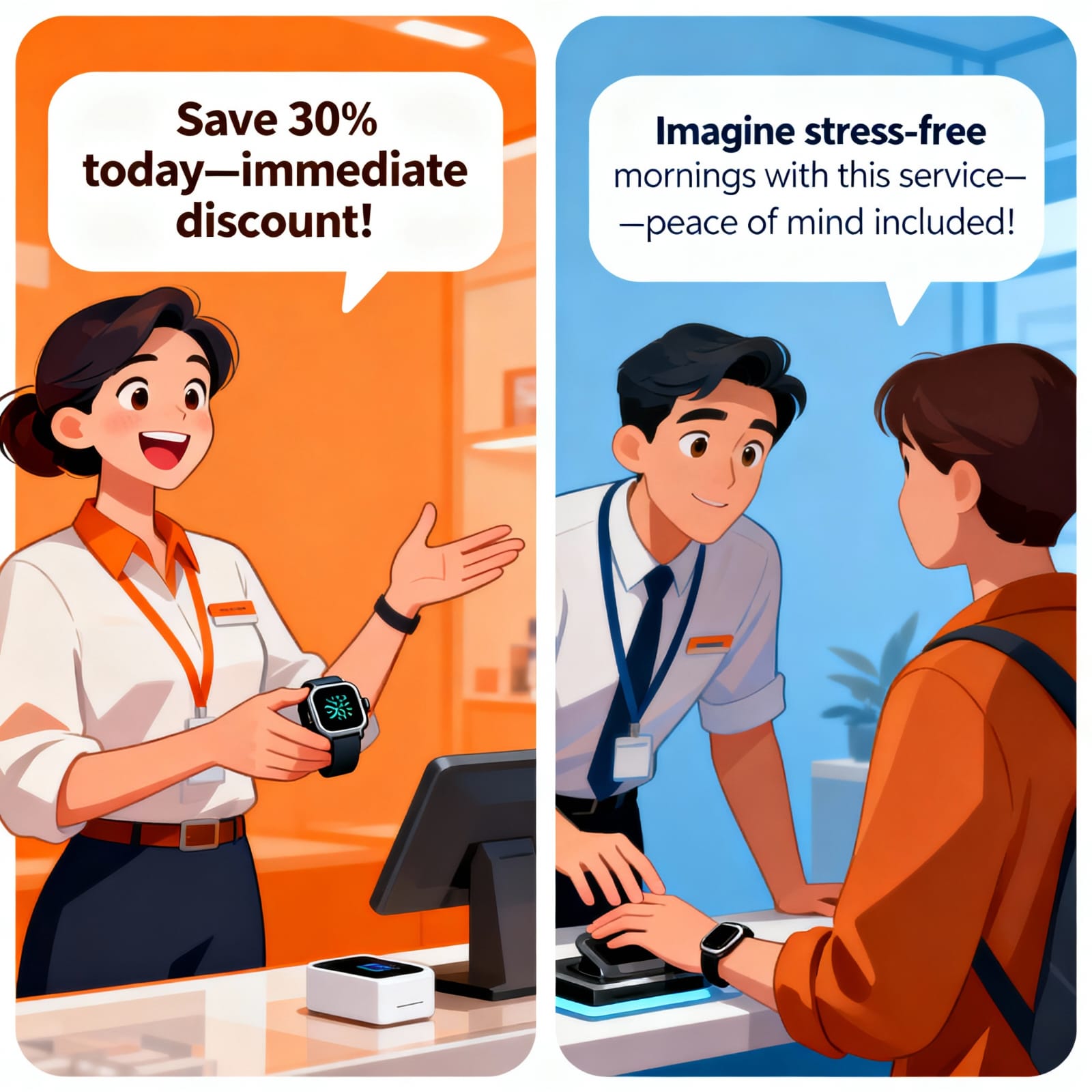
Diagram of sales techniques for tangible and intangible benefits.
Part 2: Selling Tangible Vs Intangible Benefits
Not all benefits are created equal, and they shouldn’t be communicated in the same way. Your observation here is critical.
Selling Tangible Benefits: The Game is Played with Your Expression
Tangible benefits are what the customer can immediately see, touch, or physically experience.
· Examples: The look of a watch, the colour of a shirt, the design of a shoe, the instant comfort of a headband.
· The Sales Technique: This is where your energy, enthusiasm, and non-verbal communication are paramount. A flat, monotone “It looks nice” is worthless.
· Use genuine facial expressions. A raised eyebrow of approval, a slow nod, a smile. When the customer tries on the jacket, don’t just stare. Step back, tilt your head, and say, “Wow, look at that fit. It’s like it was tailored for you.” Your genuine reaction gives the customer permission to feel good about their choice. It validates their potential purchase emotionally. It’s not weird if it’s authentic; it’s persuasive.
Selling Intangible Benefits: The “Feel” Factor
Intangible benefits are functional or experiential but not immediately obvious.
· Examples: Advanced cushioning in a shoe, noise cancellation in headphones, battery life in a device, the ergonomic design of a chair.
· The Sales Technique: Here, your role is that of a guide. You can’t show them the cushioning, so you have to make them feel it.
· Explain, then validate. “What makes this shoe special is this proprietary foam in the midsole. It’s not just soft; it’s energetically responsive. Here, press your thumb into it. Feel that? Now, imagine that rebound with every step. Why don’t you take a walk around the store and just feel the difference compared to your current shoes?”
· Your demeanour should be more measured, knowledgeable, and confident. You are the expert letting the product speak for itself through the customer’s own experience.
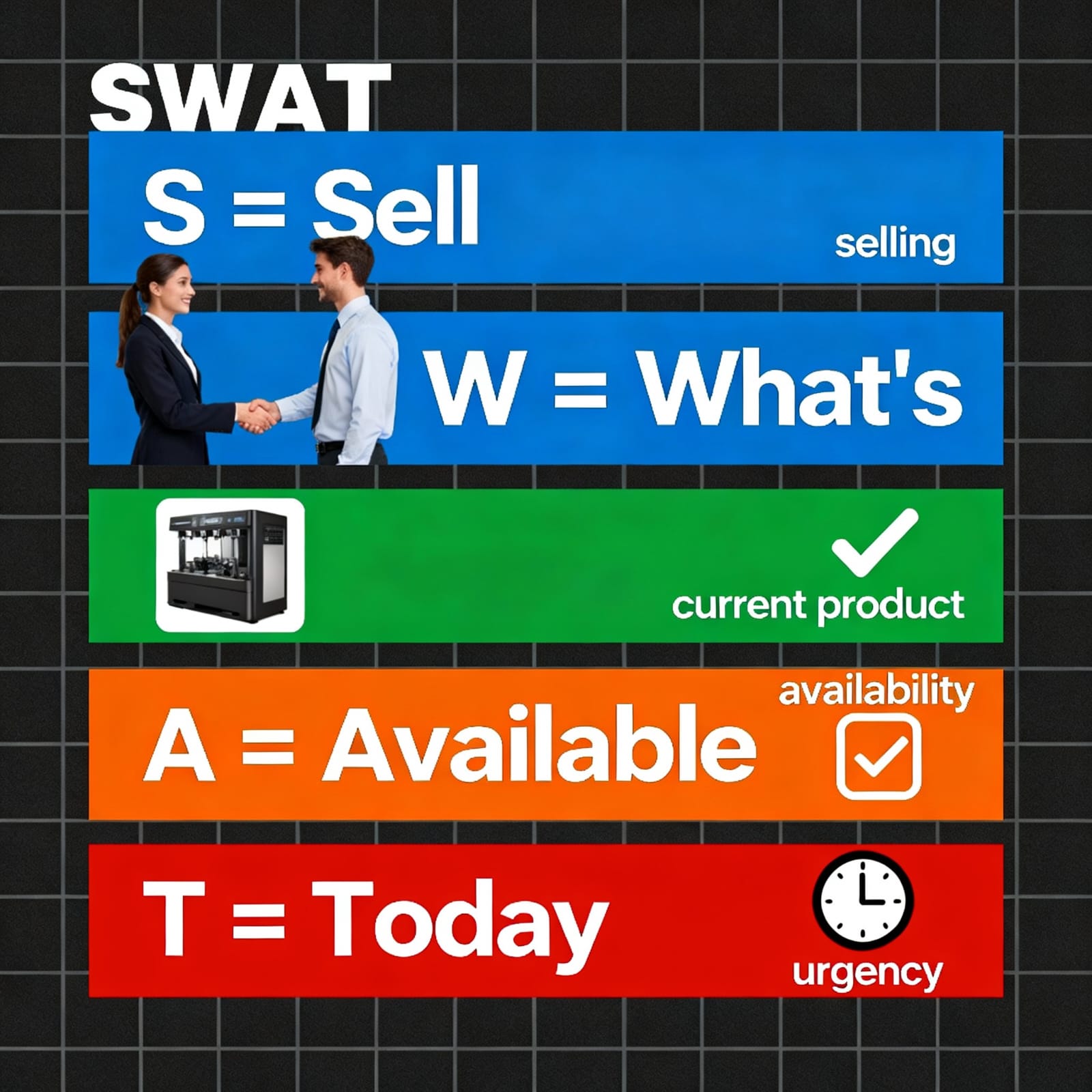
Infographic showing SWAT sales doctrine steps.
Part 3: The Strategic Use of Limitations (The SWAT Doctrine – Sell What’s Available Today)
This is the master-level move. Limitations are not always the enemy. When wielded strategically, they become your most powerful tool to guide a customer toward what you can sell them, especially when their desired product is unavailable.
The Scenario: A customer is adamant. “I want the Cloud9 headphones. I’ve read all the reviews.” You know the Cloud9 is discontinued and out of stock. The rookie would say, “Sorry, we don’t have that.” The pro uses the SWAT strategy.
The Technique: Appreciate, Bridge, and Pivot.
1. Appreciate Their Choice: “The Cloud9 is a fantastic choice, sir. You have great taste. It was legendary for its noise cancellation.” (This builds rapport and shows you respect their research).
2. Bridge with a Subtle Limitation: “You know, one thing that often came up in expert discussions was its weight. At 320 grams, it was a bit on the heavier side for longer listening sessions.”
3. Pivot to Your Product’s Superior Benefit: “What I have here is the newer Aura10 model. It matches the Cloud9 on noise cancellation, but the engineers have made a leap in sound clarity. The real game-changer? It’s almost 20% lighter. You’re not buying headphones every day, so why not go for the best of both worlds—pristine sound without the neck strain during your long work calls or travel?”
What just happened?
· You didn’t badmouth the desired product. You stated a factual, comparative limitation.
· You positioned your available product not as a “consolation prize” but as a superior, more evolved alternative that solves a problem the customer hadn’t even considered.
· You used the limitation to create a new need (“comfort over long periods”) and then immediately fulfilled it.
The Golden Foundation: Probing Before Pitching
None of this advanced framing works if you don’t know what the customer truly needs. This is the non-negotiable first step.
Before you even think about showing a product, your goal is to conduct a gentle interview using a mix of open-ended and closed-ended questions.
· Open-ended (to understand context): “What kind of running do you mostly do?” “Where do you plan on using these headphones the most?” “Tell me about your typical workday.”
· Closed-ended (to confirm specifics): “Are you training for a marathon?” “Is battery life more important than absolute bass for you?” “Do you prefer a snug or a relaxed fit?”
This discovery phase allows you to align the primary benefit of your product directly with the customer’s primary need. Once that core connection is made, all the other features become the “icing on the cake”—the added value that makes your product an undeniable, “no-compromise” choice.
Conclusion
Selling is no longer about reciting a spec sheet. It’s a strategic communication dance. It’s about framing features as expansive benefits, using your energy to sell the tangible and your expertise to sell the intangible, and having the wisdom to sometimes use a competitor’s limitation to your advantage. By mastering the language of possibility, you stop being just a salesperson and become a trusted advisor—and that is the ultimate key to not just closing a sale, but to building a customer for life.