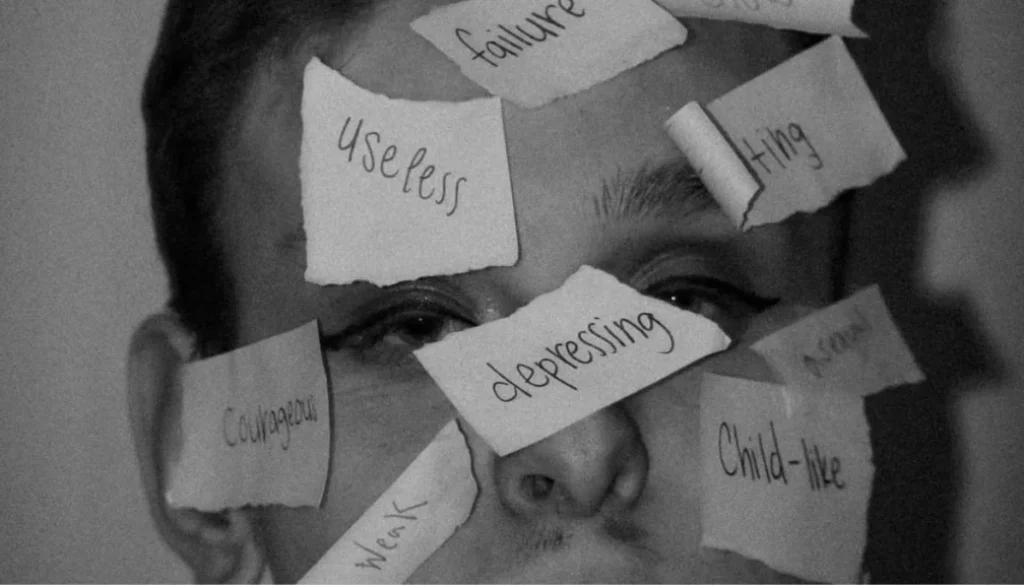
Your Own Worst Enemy: The Complete Guide to Understanding and Overcoming Self-Sabotage
You set a goal. You’re excited, motivated, and ready to conquer. You know you have the potential. But then, almost on cue, a voice in your head whispers, “Who do you think you are? You’re not capable of this.” Or perhaps a well-meaning (or not-so-well-meaning) person makes a comment that deflates your confidence.
The next thing you know, you’re procrastinating. You’re finding excuses. You’re making a “silly mistake” that derails the whole project. You show up unprepared. You ultimately fail, and that same voice says, “See? I knew you couldn’t do it.“
If this cycle feels familiar, you are not alone. You have just met your own worst enemy: the art of self-sabotage.
What Exactly is Self-Sabotage?
Self-sabotage is any conscious or unconscious thought or behavior that stands in the way of your own goals and desires. It’s the internal machinery that creates a self-fulfilling prophecy of failure. We doubt our capabilities, fear the outcome, and then unconsciously orchestrate our own downfall to confirm our limiting beliefs.
A Personal Example : I once had a dream of being a cricketer. I was dedicated, waking up early for practice every day. Then, one day, I played a single bad shot. A junior coach, whose opinion I valued, tore into me, trashing my skill and my potential in that moment. That one external comment became the seed of a deep internal doubt. It was the starting pistol for a long race of self-sabotage.
Why Would We Do This to Ourselves? The Root Causes
It seems illogical. Why would we actively work against our own interests? The answer lies in our brain’s primitive wiring. The brain’s primary job isn’t to make us happy; it’s to keep us safe. And safety often means sticking with what’s familiar, even if what’s familiar is unhappiness.
Here are the core drivers:
1. Fear of Failure: This is the big one. The logic is twisted but powerful: “If I don’t really try, I can’t truly fail.” By sabotaging our efforts, we protect our ego from the bruising reality of having given our all and still coming up short.
2. Fear of Success: Success can be terrifying. It brings change, higher expectations, and the spotlight. The subconscious thinks, “What if I succeed and can’t handle it?” Sabotage feels safer.
3. Low Self-Worth and Imposter Syndrome: At a deep level, you may not believe you deserve good things. When opportunities arise, your brain works to align the outcome with your self-image.
4. Need for Control: This is a crucial point. As you rightly said, the external world is not in our control. This is terrifying. By self-sabotaging, we ironically create a controlled failure. We choose the manner of our defeat.
In my story: The world of cricket—a coach’s opinion, the pressure of selection—was out of my control. But quitting? That was a decision I made. By choosing to quit, I took control of the narrative. I made the failure happen on my terms, which felt less painful than the uncertainty of trying my hardest and potentially being rejected again.

Me and my teammates, who are also my childhood friends, after the match.
5. Past Trauma and Conditioning: If you grew up in an environment where you were constantly criticized, your nervous system may have learned that standing out is dangerous.
The Many Masks of Self-Sabotage: How It Shows Up
Self-sabotage is a master of disguise. It wears many masks:
· Procrastination: Putting off important tasks until the pressure is immense.
· Perfectionism: Using the need for things to be “perfect” as an excuse to never start.
· Negative Self-Talk: That internal critic that constantly undermines your confidence.
· Self-Isolation: Pushing away people who support you.
My sabotage wore two masks: First, the negative self-talk (“The coach is right, I’ll never be good enough”). Then, the procrastination (“I’m too tired to wake up early. I’ll go tomorrow”). Finally, I isolated myself from the team and the sport entirely. I quit, confirming the belief that I wasn’t good enough.
How to Break the Cycle: From Self-Sabotage to Self-Support
We may never fully stop the doubts from arising. The external world will never be fully under our control. The goal isn’t to eliminate these factors; it’s to change our relationship with them. Here’s how to start:
1. Cultivate Awareness Without Judgment
You cannot change what you don’t see. Start noticing your sabotaging patterns without beating yourself up. Action Step :For one week, simply be a detective of your own behavior. When you procrastinate or feel a wave of self-doubt, just note it: “Ah, there’s that pattern again.”
2. Challenge the Inner Critic
Your thoughts are not facts. Treat that critical voice like a nervous, overprotective friend who gives bad advice. Action Step :When the thought “I’m going to fail” arises, talk back to it. Ask:
· “What is the evidence for this thought?”
· “Is this 100% true, or is it just a feeling?”
Reframing my story: I could now ask my younger self: “Was that one coach’s anger really evidence of your entire potential? Or was he just having a bad day? What about all the good shots you’d played before?”
3. Reframe Failure and Success
Redefine what failure and success mean. Action Step:
· Failure is data, not identity. It’s not “I am a failure,” but “That approach didn’t work.”
· Success is a process, not a single event. Celebrate showing up and being brave.
4. Focus on Your Circle of Control
Worrying about the uncontrollable external world is exhausting. Action Step :Draw two circles. In the outer ring, list things you can’t control (a coach’s harsh words, the weather, past mistakes). In the inner circle, list things you can control (your effort, your attitude, your decision to try again today).
This was my key insight: I couldn’t control that coach. But I could have controlled my response. I could have used his comment as fuel to practice harder. I could have sought a second opinion from another coach. I could have focused on the love of the game itself, not the external validation.
5. Practice Self-Compassion
This is the antidote to self-sabotage. You will stumble. The doubts will come. Action Step:When you catch yourself sabotaging, place a hand on your heart and say, “This is hard. It’s okay. I’m doing my best. I am still worthy.”
What I’d tell my younger self now: “It’s understandable that you quit. That criticism hurt, and you were trying to protect yourself. You did the best you could with the tools you had then. But it’s not too late to apply that passion to something new.”
The Bottom Line
Self-sabotage is a protective mechanism that has outlived its usefulness. You are not broken; you are wired for survival. But you can rewire yourself for thriving.
The journey isn’t about silencing the doubt forever. It’s about turning down its volume. It’s about learning to become your own greatest supporter, especially when that old enemy within starts to whisper.
Your turn: What’s one way you’ve self-sabotaged? What dream did you let go of because of doubt? Sharing it here is the first step to taking its power away.

October 29, 2025 @ 1:25 pm
But wanna admit that this is very useful, Thanks for taking your time to write this.